The first day of this year’s Appvent Calendar sets the tone for the month ahead. With so much attention on rapid advances in AI, it feels right to begin with a tool that brings us back to what matters most in education: clear thinking, sound evidence, and informed professional judgement.
Before we dive into that, though, a moment about this year’s calendar. This year, I am delighted to share that I have some brilliant volunteers who reached out on LinkedIn they’d love to be involved, and so I’d love to introduce the team of educators, from primary, secondary, FE, international education and those who work in education technology, who will be sharing their thoughts across the 2025 Appvent Calendar series.
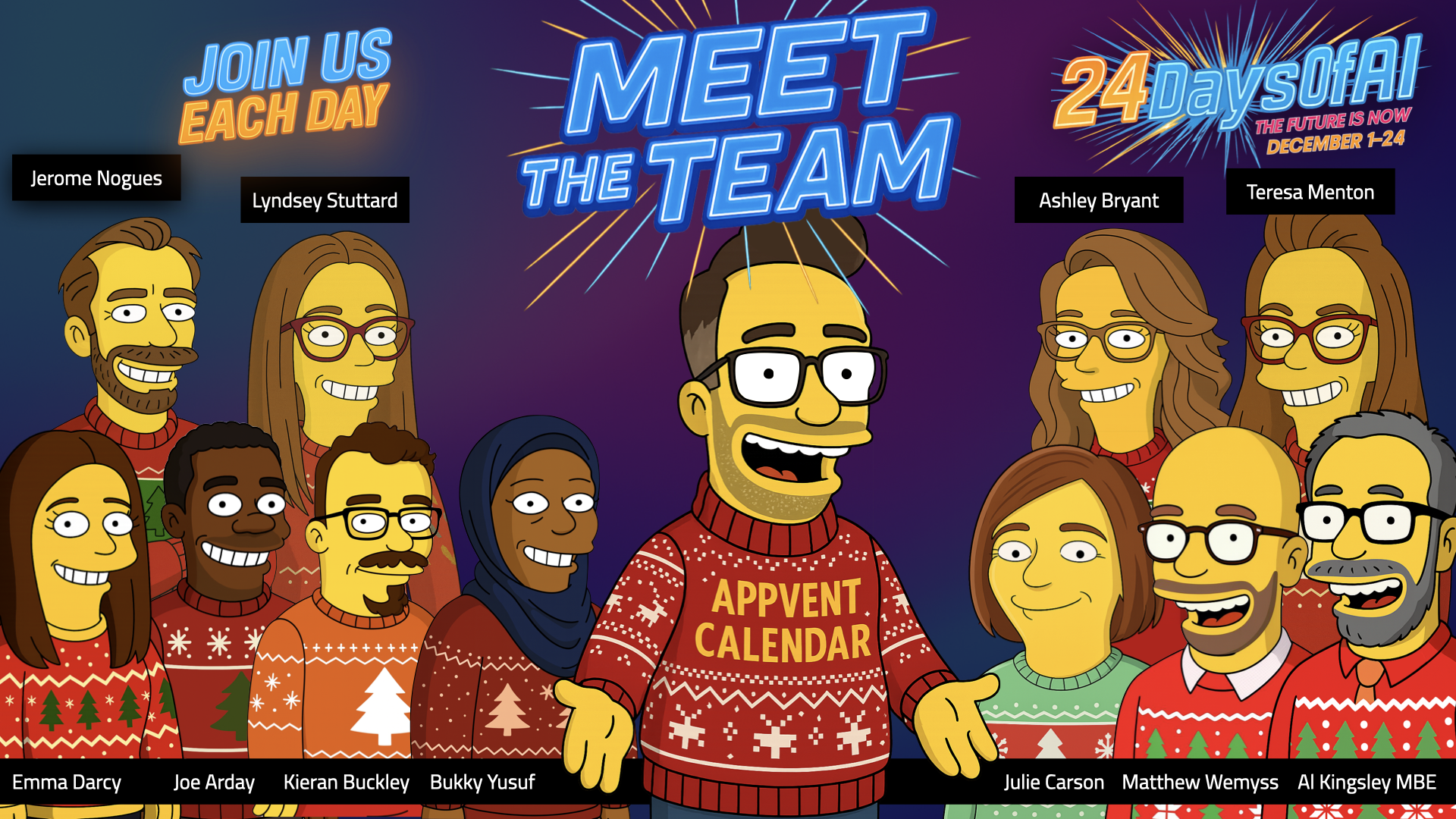
Let me introduce them…
Lyndsey Stuttard – An international educator with 21 years in the classroom, having taught in the USA, UAE, Italy and the UK. She’s an Apple Distinguished Educator with a passion for creativity and the purposeful use of Augmented Reality and a 100 Top Women in Tech for the UK and a Pearson Digital Innovator silver winner.
Teresa Menton – a passionate English teacher with almost 20 years of experience, dedicated to inspiring creativity and critical thinking. A pioneering digital advocate who has driven innovation across schools in the UK and Qatar, leading transformative digital strategies and AI initiatives that redefine teaching, learning, and the future of education.
Al Kingsley MBE – Bestselling Author & Speaker on #Education, #Ai, #EdTech #Growth. CEO NetSupport, Multi Academy Trust Chair, DfE Advisory Board, 24 ISC Global Edrupter, DBT Export Champion, #Edufuturist, BESA EdTech Chair. FRSA (and a lover of dogs and chocolate).
Jérôme Nogues – a teacher, speaker and edtech consultant with 20+ years in education. He champions AI and technology to enhance learning, sharing practical strategies online. Co-author of French learning manuals, CPD coordinator for NCLE and founder of Poésíæ, he empowers educators through creative, meaningful, human-led language learning with global impact.
Ashley Bryant – The Director of IT Innovation (Teaching and Learning) at Frankfurt International School, Ashley is an EdTech enthusiast with a specific passion for making tools accessible for all users. In a previous life, she was a Kindergarten teacher and is now an EdTech leader in a K-12 school.
Bukky Yusuf – A senior leader, leadership coach and author, working with educators on a national and international basis. She has undertaken several leadership roles within mainstream and special school settings. She participates in organisations to increase diverse leadership. Bukky supports the wellbeing of educators and co-edited ‘The Big Book of Whole School Wellbeing’. Beyond the classroom, Bukky is a Trustee and an Ed(ucation) Tech(nology) Thought Leader.
Kieran Buckley – a passionate senior education leader dedicated to advancing AI safety and governance in education and edtech. Advocates for ethical, transparent, and responsible AI adoption in schools. Committed to raising awareness of safeguarding, data protection, and equity issues, ensuring technology supports learning, wellbeing, and trust across educational communities and professional practice.
Julie Carson – the Director of Education for a five-school primary trust in Bexley and Kent, leading education strategy, digital innovation and inclusive practice. She champions Universal Design for Learning and evidence-informed use of AI to enhance teaching, reduce workload, and improve outcomes for all pupils across the Woodland Academy Trust.
Matthew Wemyss – aims to blend educational leadership with AI advocacy, guiding schools to use AI thoughtfully rather than blindly. With hands-on experience in classrooms, he supports teachers, students and leaders to adopt AI in meaningful, ethical ways. His AIGP qualification from IAPP underscores his commitment to governance and responsible AI use in schools.
Joe Arday – is an experienced educator with fifteen years in computer science teaching, working with organisations BCS, CAS, NCCE, STEM Learning UK, Raspberry Pi Foundation, Tech Girls, Tech She Can, Teach First, universities, exam boards, industry partners. He serves on the BCS council, contributes to committees, mentors disadvantaged young people and advises BETT UK and Kingston University. Joe sits on the DfE Edtech Evidence Advisory group on AI in education. He was Highly Commended as AI Citizen of the Year 2025.
Emma Darcy – the Director of Technology for Learning at Denbigh High School in Luton and an AI and Digital Strategy Consultant. She was recently announced as one of the Bett UK 2026 EdTech 10 List, celebrating ten women internationally who are transforming the education technology landscape.

Consensus: Evidence at Your Fingertips
Today’s focus is Consensus, an AI-powered academic search engine designed to help educators access high-quality research quickly and purposefully.
AI Tool of the Day: Consensus
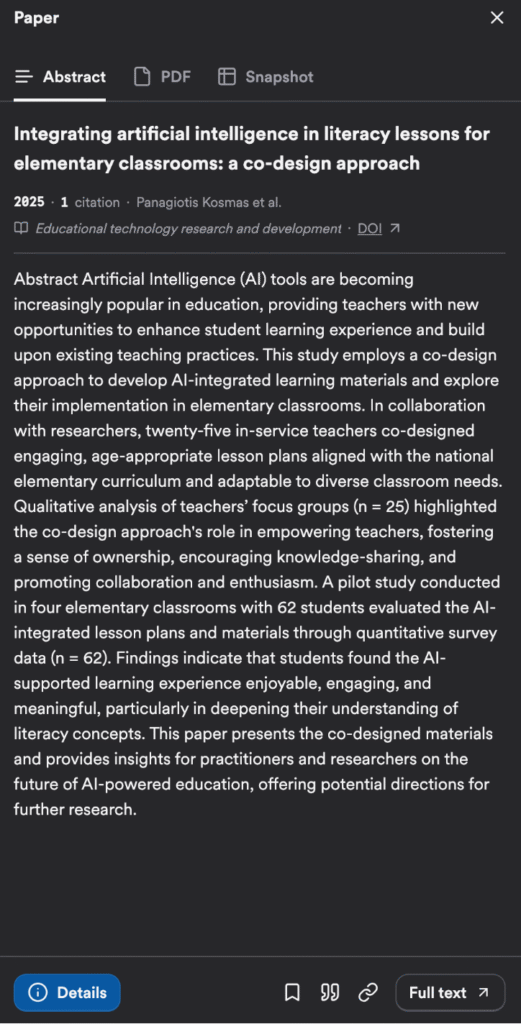
Consensus is built to do one thing particularly well: answer evidence-based questions by searching and synthesising peer-reviewed research. Instead of manually navigating databases, scanning abstracts, or filtering low-quality sources, you can pose a question and receive a concise summary grounded in the academic literature. Each insight is linked to the original studies, ensuring transparency and encouraging deeper reading.
For educators committed to evidence-informed practice, the tool provides a streamlined route into the research base without compromising rigour.
Educational Impact
Teachers, leaders, and research leads often want to engage with the evidence but face predictable barriers: limited time, restricted access to academic journals, and the practical challenge of locating reliable studies. Consensus reduces this friction by presenting research findings clearly and efficiently.
The tool supports a thoughtful approach to professional learning. It helps colleagues build research literacy, strengthens understanding of the evidence underpinning teaching practices, and encourages more confident conversations about what works and why. For those leading teaching and learning, it provides a practical foundation for shaping professional development, reviewing pedagogical approaches, and informing strategic decisions.
Consensus also aids early exploration when developing policies or evaluating new programmes. By scanning the research landscape before committing time to detailed reading, staff can identify strong starting points and avoid claims that are not supported by evidence.
Classroom and School Applications
Teaching and learning leads can use Consensus to prepare briefing papers, CPD resources, or evidence summaries ahead of subject or phase meetings. Its clear explanations help colleagues understand the wider research picture while still encouraging them to engage with primary sources.
Research leads can build enquiries around questions generated by staff, using Consensus to identify key studies and map areas of agreement or debate. This is particularly helpful when forming working groups, reviewing whole school practices, or exploring areas such as cognitive science, literacy, behaviour, or assessment.
School and trust leaders can use the tool to scrutinise claims made by commercial providers, assess emerging trends, and ensure that investment decisions are based on evidence rather than novelty. Because every insight is cited, Consensus makes it easier to scrutinise the source material and assess its relevance for the context of the school.
Considerations for Implementation
Consensus includes several safeguards that support reliability. It restricts searches to peer-reviewed research, uses a hybrid approach to locate both exact-match and conceptually relevant studies, and re-ranks results using quality signals such as recency and citation strength. This helps mitigate common biases found in general AI tools and supports transparent, responsible use.
Even with these strengths, educators should approach the outputs with professional curiosity. Summaries can simplify complex arguments, and niche areas of research may be underrepresented. Consensus should be used as a starting point rather than a substitute for reading the original studies. Encouraging staff to follow the citations, compare interpretations, and discuss methodological strengths and limitations will strengthen research literacy and support more nuanced decision-making.
A short induction into effective question framing and evidence interpretation can help colleagues make the most of the platform. As with any AI tool, the value emerges not from the technology alone but from how educators use it to deepen understanding and enrich professional dialogue.
Final Thoughts
Starting the Appvent Calendar with Consensus, I thought, was important, at least for me, so that we start the ball rolling by reinforcing the importance of grounding our work in reliable evidence, particularly in a year defined by fast-moving technological change. Tools like this support thoughtful, reflective engagement with research and help ensure that professional decisions remain anchored in what we know, not simply what is new.
Join us tomorrow as we continue exploring AI tools that enhance teaching, strengthen learning, and support informed, human-centred practice across our schools. Any thoughts on what we might share tomorrow?