
Research-informed teaching and learning should be de-rigeur nowadays. It’s been great seeing the shift towards this in British Education over the last three decades of my career; it simply wasn’t a thing when I trained to be a teacher. For me, working from a point of knowing ‘what works’ is essential for thoughtful teaching and leadership, yet it remains one of the most demanding things you can do.
Academic papers vary widely in format and terminology, and locating studies that genuinely address your question takes time that neither teachers nor leaders have. Many want to ground decisions in evidence, but barriers of access and workload often stand in the way.

That’s why I simply love and am so excited to share today’s Appvent 24 Days Of AI entry, Elicit. First highlighted by me on my Periodic Table of AI Tools in Education to Try Today, Elicit is an AI research assistant which helps you navigate academic evidence with confidence and efficiency. It supports you to:
- identify relevant papers,
- synthesise key insights, and
- compare findings
…without removing the need for professional judgement. Elicit does the hard work, so you can concentrate on thinking, interpretation and purposeful action. Great AI in action!
AI Tool of the Day: Elicit
Elicit uses semantic search to locate research that aligns with the intent of your question rather than only its exact wording. This is particularly helpful in education, where the same idea can be described in many different ways. Ask a clear question, and Elicit will surface studies that are conceptually connected even if the phrasing differs.
The tool can summarise papers, extract methodological details, highlight limitations and generate comparison tables that help you see patterns across the papers. You remain in control of how the evidence is interpreted and how it may apply within your own context.
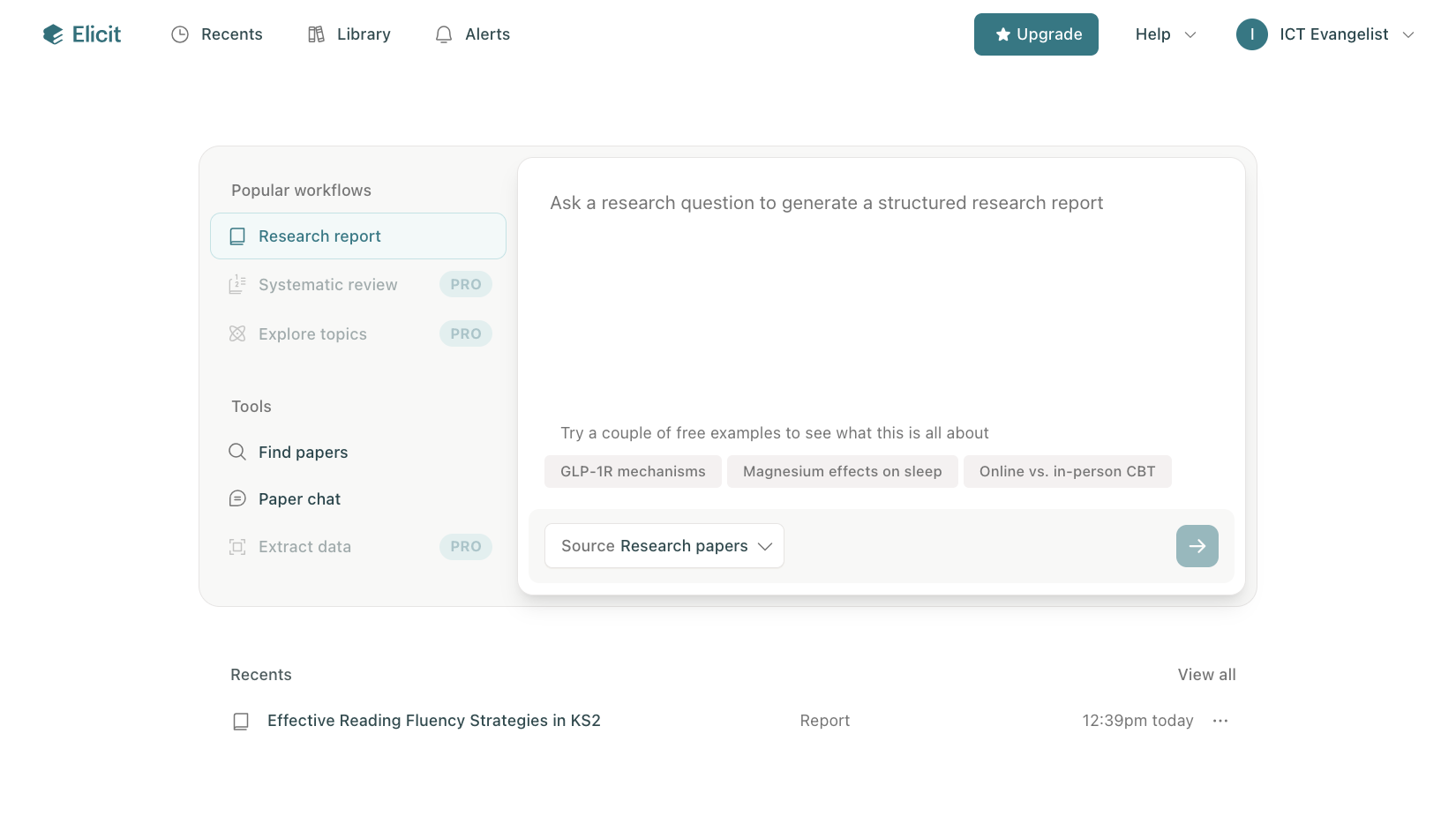
An example of a report I generated (I’ll refer to and explain how I made it) through Elicit can be viewed here:
https://elicit.com/review/1be0c0d5-8442-4b4d-8525-44ab43e57ac4
Educational Impact
For teaching and learning leads, heads of department and senior leaders, Elicit offers a simple route into research engagement that does not depend on extensive time to do academic reading. It also, through careful prompt design, can help give research-informed strategies to the improvement areas you’re focused on. It can help answer complex questions and give you its evidence base from which you can develop curriculum, pedagogy and professional learning.
In the sample report linked above, the research focus was reading fluency in KS2. Elicit identified a set of studies that explored this topic from a range of perspectives and methodologies. It summarised the findings and highlighted clear patterns such as the importance of repeated reading, structured modelling, precise feedback and scaffolded fluency practice. It also surfaced points of tension and variance in the research, which is essential for balanced, reflective conversation.
This kind of synthesis strengthens your strategic decision-making. It helps you see where current practice aligns with evidence, where refinement might be beneficial and where professional judgement and context can bridge gaps in the literature. It brings a level of structure and coherence to evidence-informed improvement that can otherwise be difficult to achieve.
Practical Application
Like many AI tools, Elicit works best when your prompt is crafted carefully.
My STAIR framework (as shared in the EdTech Playbook and other resources) provides a simple yet powerful way to shape these prompts so the tool can discover what you’re really looking for.
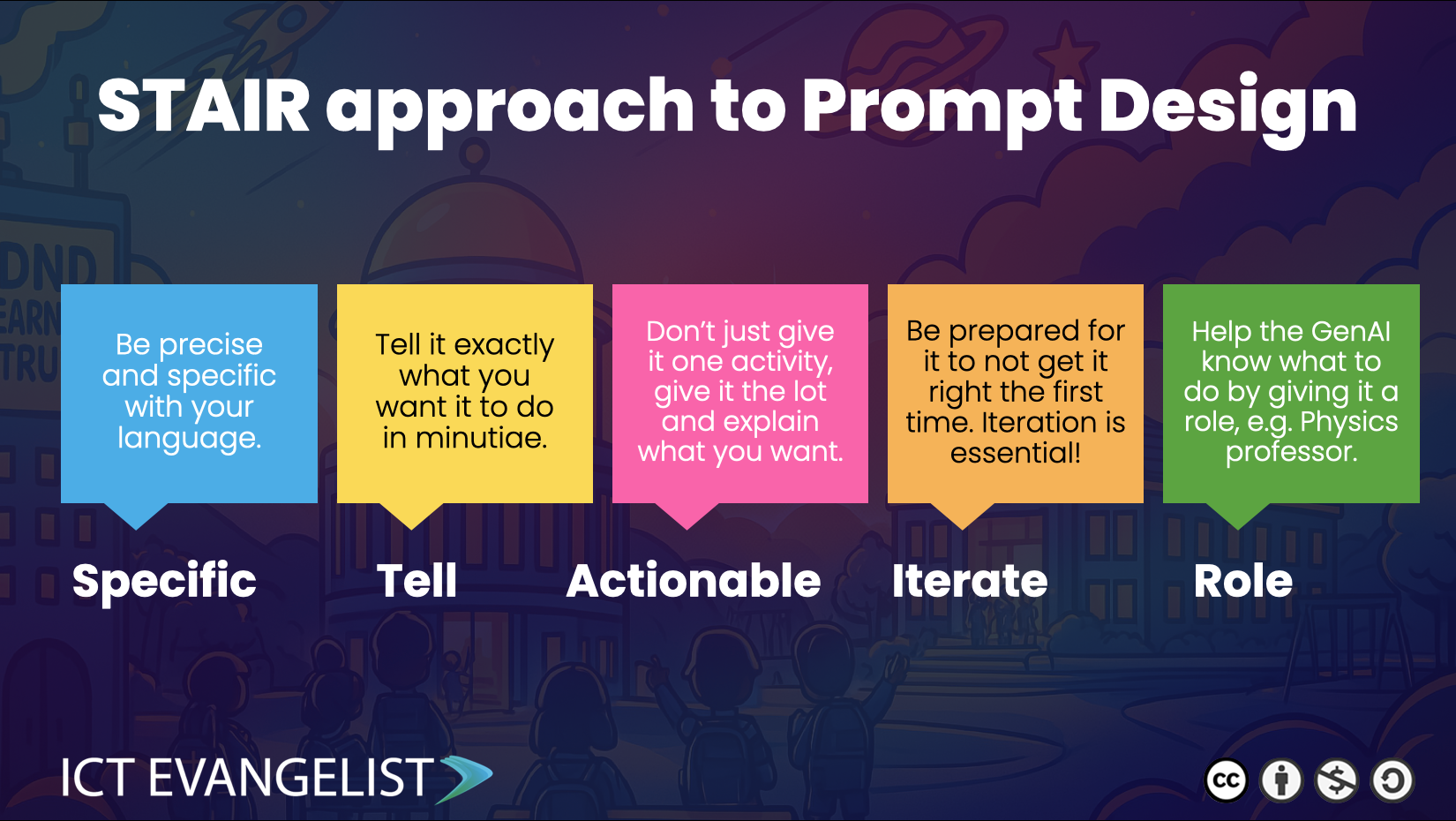
Below is how each element maps into a single effective prompt you can paste directly into Elicit.
S – Specific in writing
Define the research focus precisely.
What does the evidence say about effective strategies for improving reading fluency in KS2 pupils?
T – Tell it what to do
Give detailed instructions.
Identify study outcomes, methods, sample characteristics and any limitations that affect transferability to mainstream primary contexts
A – Actionable
Request concrete tasks.
Produce a comparison table of at least six studies, highlight common themes and note any points of tension or disagreement across the research
I – Iterate
Prepare for refinement.
If the evidence set is too broad or does not match the intent, prompt me with clarification questions so we can refine the search together
R – Role
Define the perspective.
Present the findings as if advising a teaching and learning lead preparing CPD for Year 3 and Year 4 teachers
The combined STAIR prompt
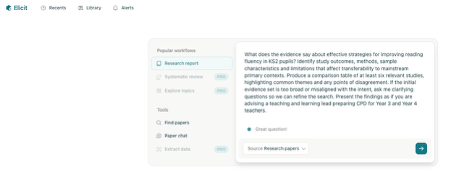
Here is what it looks like when all five elements are woven into a single, coherent Elicit prompt:
“What does the evidence say about effective strategies for improving reading fluency in KS2 pupils? Identify study outcomes, methods, sample characteristics and any limitations that affect transferability to mainstream primary contexts. Produce a comparison table of at least six studies, highlight common themes and note any points of tension or disagreement across the research. If the evidence set is too broad or does not match the intent, prompt me with clarification questions so we can refine the search together. Present the findings as if you are advising a teaching and learning lead preparing CPD for Year 3 and Year 4 teachers.”
How does this report support your improvement journey?
A structured Elicit report can serve several useful purposes in school or trust settings:
Curriculum development
Use the findings to review your literacy or reading strategy. Identify alignment, gaps and opportunities to strengthen progression.
CPD and professional learning
The comparison table provides an excellent foundation for a staff meeting or subject development session. It gives you a clear evidence-informed lens through which to discuss practice.
Coaching and mentoring
Draw on specific study outcomes when supporting colleagues who are refining their approach to reading instruction.
Intervention planning
Use insights from the research to shape targeted support for pupils who are not yet fluent readers.
Strategic documentation
Incorporate the evidence into SEFs, improvement plans or trust level literacy priorities to strengthen the rationale for chosen approaches.
Professional dialogue
The report creates a shared knowledge base that brings consistency to conversations across year groups and departments.
Elicit does not replace your expertise. It supports and enhances your ability to work with evidence in a way that is manageable, meaningful and connected to the real needs of your pupils.
Considerations and Tips
- Frame your question with precision. A clear focus leads to more usable results.
- Treat summaries as guides rather than replacements. Return to the full papers when detail matters.
- Use the outputs as a starting point for reflective conversation rather than a set of instructions. Context will always shape interpretation.
- Expect to refine your prompt. Iteration is part of the process and helps steer the tool towards what you actually need.
Conclusion
Elicit offers teachers and leaders a practical, structured and efficient way to engage with research. It reduces the barriers that often prevent colleagues from accessing evidence and creates space for deeper thinking about teaching, learning and strategy. By curating insight rather than generating content, Elicit supports educators to make confident, informed decisions that benefit pupils.
Want to learn more and have a go yourself? Visit Elicit’s website here.
Join me tomorrow for Day 11 of the Appvent Calendar as we continue exploring tools that help educators work with clarity, purpose and confidence.
Please do comment, like, repost and share so your PLN can learn too ☺️